Author: Gembp

  • Seizing Life out of the Abyss of Darkness

    Embracing Life despite Overwhelming Challenges

    “Ang buhay ay parang gulong- kung minsan nasa taas, kung minsan naman ay nasa baba.”

    Yet even with this truth, many of our kababayan find themselves struggling, and tragically, some have reached the point of giving up on life. Stories of despair are no longer remote; they happen in our own communities, quietly and often unnoticed. Life’s trials, such as family challenges, financial burdens, mental health struggles, and the constant pressures of modern living—can weigh heavily on even the strongest hearts. These realities remind us of the power of compassion, empathy, and simple acts of kindness. Sometimes, a listening ear, a heartfelt word, or a small gesture of support can be enough to remind someone that he or she is not alone.

    Realities in Life

    Many of us have faced hard times, yet we kept going. We have felt the hunger of having only root crops on the table while dreaming of rice. In our school days, there were times when we didn’t even have a peso for a tricycle ride home, or the 25 pesos needed to go to our home province during holidays. Even without money for photocopies of our lessons, we found ways to keep learning. Still, we survived. We kept trying, and our diplomas show that we never gave up.

    Some of us may be deprived of a complete physical body, yet they continue to live fully – the deaf enjoy videos and music in their own way, and the blind find their way through life with remarkable skill. Yet, sadly, there are those who are physically whole but still give up.

    During one event attended by local officials, some men made jokes about an official who is a Person with Disability (PWD). They directed a mocking remark at him, saying, “Attorney, our roads are well built—smooth and without any defects—yet whenever you visit our place, you always make it appear as though they are poorly constructed.” The remark was met with loud laughter. In one of his speeches before a large audience of college students, however, the official spoke about the positive meaning of being a PWD. He explained that the most meaningful interpretation of the acronym is “Persons with Dignity.”

    Why Some Let Go When Life Gets Heavy

    Many young people give up on their studies when financial constraints make it difficult to pay school fees. Others, particularly in this generation, easily lose motivation over material limitations—such as not having a new or desirable smartphone—mistaking comfort for necessity. Some give up on their families when home becomes a place of chaos caused by domestic abuse or broken relationships. Worse still, some give up on life itself when they are unable to cope with embarrassment, repeated failures, bullying, or the pain of defeat.

    An article on thepositivepsychologypeople.com written by Pinky Jangra suggests that resiliency is a very important life skill claiming it is a “denominator of success, happiness and wellbeing”.

    It is agreeable that, in both big and small matters in life, there is a need to adapt, adjust, and keep going despite the adversities we face.

    Knowing When to Quit

    Knowing when to give up is a sign of wisdom and self-respect. A person is conscious and aware of the consequences of his decisions in case he acts on it. He can recognize when a path no longer leads to growth, healing, or purpose, despite the effort already invested. He balances things and gives time for himself to take other options.

    When we decide to let go of something, we make room for better opportunities and rely on our perseverance must be guided by reason, values, and dignity.

    In its article The Psychology Behind Giving Up, Walden discusses several practical strategies for doing this thoughtfully and confidently. These can help a person make wise, self-respecting choices about when to continue and when to step back.

    The Case of my Blind Grandfather

    The story of one of my grandfathers is a testament to the resilience that God has given humans. He was born completely blind. It was believed that his blindness was a result of a curse upon his parents by some unknown enemies, or by a spell dropped or murmured intentionally or not by someone they must have encountered. Upon his birth, his parents started to perform all possible rituals to appease the gods, offering several pigs and chickens that he may be cured, but nothing made him see. The story of his life was narrated repeatedly by himself personally as we the children would surround him to listen.

    He was a young boy during the Second World War, and he could have been of great help during the many times his family ran to the mountains to hide from the Japanese, as well as during the difficult evacuation when they had to cross the Rocky Mountains to reach the military camp located several mountains away.

    During those incidents, he would cry to his mother, begging her to leave him behind and stay in the village because he could not run anyway. He felt useless, unable to help during their escape, and believed he was only a burden. However, with her comforting words, he continued moving with the group, leaning on his cane. He only realized, once they were already in the camp, that he had fared better during the escape, when they crossed rivers and mountains in the dark.

    His trouble resumed during the long journey back home, after the surrender of Tomoyuki Yamashita, this time not from the rough mountains, but from the stench of dead bodies wherever they passed. He would scream in frustration because of their plight and his own condition.

    He only realized, once they were back home, that he had fared better during the escape when they crossed rivers and mountains in the dark—for then, his life was pure darkness, and the dark was his daylight, and his cane his first foot.
  • Geothermal Energy: Experience the Hot Smoke of Mountain Province

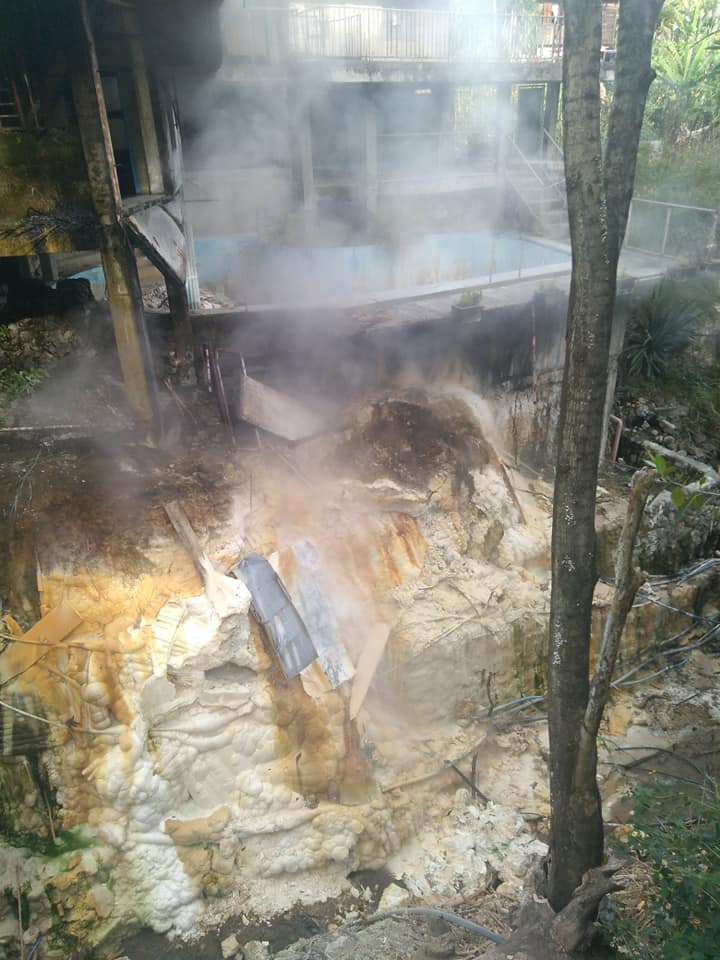
    One New Year’s Day, we visited a village where steam curls from the ground, turning an ordinary visit into a moment of wonder. The earth was fuming with hot air, carrying the faint scent of minerals and sulfur. This reminded us that the ground beneath was far from ordinary. We reached Brgy. Mainit Hot Spring, a place where a geothermal activity is not only visible but powerfully felt.

    We felt a peculiar thrill in standing on land that seemed simultaneously welcoming and dangerous. We were afraid that one misstep could lead to a searing encounter with boiling water emerging directly from the soil.

    The hot spring of Mainit is not a gentle stream trickling over rocks; it is a raw manifestation of geothermal energy. The main outlet of the boiling water has been carefully covered to prevent any unfortunate incident. The current of water emerging from the earth is strong enough to reach a radius of ten meters, posing danger to areas where people walk, play, or enjoy the scenery.

    You can feel the spring’s power under your feet. The ground hums with deep, constant heat. Steam rises from the soil, twisting and swirling as it climbs into the air.

    A local built his house in the area before the full strength of the geothermal activity became evident. It was a dramatic reminder to people that nature’s forces, however quiet, are inexorable.

    Hot Steam rising from Mainit a Spring in Mountain Province

    Hot Energy from the Earth

    Today, the community has learned to coexist with this phenomenon, transforming potential danger into opportunity. The hot water, once an uncontrolled hazard, is now carefully siphoned by residents and resort owners. Mixed with cold water, it fills pools designed for bathing, inviting visitors to soak in its naturally heated embrace.

    There is a serene pleasure in immersing oneself in water that is simultaneously earthy, warm, and alive with energy. Despite its remote location, the barangay now hosts two resorts, attracting both local and foreign tourists. These visitors come not only for the relaxation but also to witness the rare and humbling sight of land that quietly exhales steam, a living demonstration of the Earth’s vitality.

    Standing near the hot spring, one cannot help but marvel at the visible evidence of forces operating far beneath the surface. Experts describe the rising vapor as a natural geological phenomenon closely associated with geothermal activity. Essentially, it occurs when heat from beneath the Earth warms underground water. As the water heats, it turns into steam and seeks escape through cracks, vents, or porous soil, creating the smoke-like plumes that rise into the air. On cooler mornings or after rainfall, when the temperature difference between the ground and the air is greatest, the steam appears more dramatic, sometimes curling into wisps that seem almost ethereal.

    Many geothermal areas like Mainit are located near volcanic systems, even if no eruption is occurring. Here, the Earth’s crust is thinner or fractured, allowing heat from magma or hot rocks below to interact with groundwater. As pressure builds beneath the surface, the water is forced upward, sometimes explosively, to find a path to the open air.

    Depending on temperature, pressure, and the chemical composition of the underground water, these vents may be classified scientifically as fumaroles, steam vents, or geothermal seepages. While many release mostly water vapor, some may also emit small amounts of gases, including sulfur compounds, which contribute to a distinctive, occasionally pungent aroma.

    Cultural Significance

    Beyond their scientific explanation, these steam-releasing areas carry cultural and ecological significance. Communities that have grown up around geothermal sites often weave these natural features into their folklore and daily life. In Mainit, the presence of the hot spring is more than just a tourist attraction; it is a part of the community’s identity.

    Children learn from an early age to respect the bubbling waters, elders share stories that trace back generations, and local practices reflect an intuitive understanding of balance—harnessing the resource safely while living alongside its inherent dangers. Environmental awareness is almost instinctive here, as residents recognize the delicate interplay between human activity and the earth’s relentless energy.

    Visiting Mainit Hot Spring is, in a sense, an encounter with time itself. The geothermal activity visible today is a result of processes that have been unfolding over thousands, even millions, of years. Heat and pressure build slowly beneath the crust, shaping landforms, forcing water to boil, and slowly sculpting the terrain in ways invisible to the casual observer. To watch steam rising from the soil is to witness the Earth in motion, to see energy being released in real time, and to appreciate the magnitude of forces that operate far beyond human perception. It is a humbling experience, reminding visitors of their small place within a vast and dynamic planet.

    Tourists to the area are often surprised by the hot spring’s duality. On one hand, there is danger—a clear warning in the form of caution signs, covered outlets, and local guidance. On the other hand, there is opportunity—the chance to bathe in naturally heated waters, to observe steam plumes twist against the sky, and to feel the subtle vibrations of the Earth beneath one’s feet. This balance between awe and caution is part of the allure. Photographers, nature enthusiasts, and science lovers alike find themselves captivated, each visitor interpreting the scene through their own lens, whether artistic, recreational, or intellectual.

    Optimizing the Hot Spring

    Local resorts have embraced this geothermal feature, designing pools and facilities that maximize the natural resource without compromising safety. Visitors can enjoy the warm waters surrounded by lush vegetation, with steam rising around them like a natural sauna. For many, the experience is meditative; the sight of mist curling in the morning light, the rhythmic sound of water gushing, and the earthy aroma combine to create a profound sense of connection with the natural world. Brgy. Mainit Hot Spring is, indeed more than a mere destination; it is a living classroom of geology,  a demonstration of human adaptability, and a sanctuary where people can witness the raw power of nature.

    The phenomenon of rising steam reminds us that the Earth is never truly still. Beneath the quietest landscapes, heat, pressure, and energy are at work shaping the world we inhabit. Scientific knowledge and cultural wisdom meet here, forming a narrative that is both educational and deeply experiential. Whether one comes for curiosity, recreation, or reflection, Mainit offers a rare opportunity to see, hear, and feel the living, breathing planet beneath our feet.

  • How to Write a Book: A Practical Guide for Aspiring Writers (1st of a Series)

    Writing is more than putting words on paper or encoding thousands of words on a computer; it is the act of giving form to thoughts, emotions, and experiences. It allows us to make sense of our inner life and share it with others. Through writing, we preserve ideas, express truths, and connect across time and culture. It is both a personal journey of reflection and a bridge of communication, making it a powerful tool for learning, healing, and inspiring change.

    According to Dictionary.com, a writer is “a person engaged in writing books, articles, stories, etc., especially as an occupation.” But the word can also mean anyone who commits his or her thoughts to writing.

    I prefer a broader view, like the one shared by Richard Nordquist on Thoughtco.com. He included a quote from Pat Schneider, who said, “Everyone is a writer.” She points out that every culture has its own way of recording ideas, whether by carving in stone, writing on bark, or sharing stories and songs aloud. From this perspective, we are all writers in one way or another. Nordquist’s observations about writing include the connections between language and the brain, the historical development of writing, and the practical considerations of writing.

    For me, writing is a skill, a passion and an act of love. Love gives meaning to the words I write, and writing allows love to find its voice. Together, they help me process life’s struggles, remember its joys, and share lessons with others. When writing and love go hand in hand, even simple thoughts can become meaningful stories that comfort, inspire, and guide.

    Inspiration from Literary Writers

    For many readers, inspiration comes most strongly from certain authors. What they write, what mood they present their messages, and how they write motivate readers into writing their own books.  It is not the authors’ names, backgrounds, race, culture, social status, or position in government that truly matters, but their work. When stories move our hearts, when they make us laugh, cry, or reflect on ourselves, we remember the author. We carry them in our hearts, not forgetting, but instead feeling inspired to follow their example or create as they did. Basically, they teach; they heal and connect us to the world.

    In her article “Inspirational Authors Who Will Rekindle Your Love of Writing,” Abi Wurdeman mentioned that authors inspire because of their authenticity, commitment, curiosity, joy, and courage. Authors are indeed authentic because they write what they know is worth sharing with others without worrying too much about what readers might say. They are also committed to themselves, striving to produce something out of their creative effort without dwelling on whether they will have readers or if anyone will buy their books. Their curiosity about life and their joy in writing add to the inspiration for readers, often motivating them to become writers too.

    I am most inspired by the way Florante at Laura was structured by the famous Francisco Balagtas, also known as Francisco Baltazar. Florante at Laura is a long narrative poem that tells the story of a young Christian couple’s struggles against both external and internal enemies. The story reflects the struggles of the Filipino people during the Spanish period. While it is a love story about Florante and Laura, as well as Aladdin and Flerida, with the intrusion of Adolfo, it also mirrors the difficult situation of the country at that time. Balagtas himself endured imprisonment, and this personal suffering shaped the depth of the poem. As stated in an article, the poem was written while Balagtas was serving time in a Manila prison around 1835 or 1836, and it was published in 1838 after his release (Jurilla, 2005).

    I am amazed at how the author immediately used a flashback right after the climax, which was placed at the very beginning of the story. Although this piece of literature may have been written more than a century ago, its theme remains relevant and is still being experienced by us today.

    the legacy of these writers is not limited to the pages of their works. Authors do more than tell stories; they awaken the storyteller in us. Through their words, we are reminded that our own experiences and reflections are also worth sharing. In their courage to write, we find the courage to begin; in their inspiration, we discover the spark to create our own voice on the page.

    For me, that spark shines brightest in poetry. I love the way poems express emotions in words and lines so limited, yet so deep in meaning. One poem I deeply admire is Invictus by William Ernest Henley, written in 1875. I have even memorized it, both for my personal reflection and for use in my poetry classes. The poem speaks of the unconquerable soul and encourages readers to remain strong amidst life’s adversities. Its final stanza, with its powerful couplet, has become the most enduring and memorable part of the work.

    The lines, “I am the master of my fate, I am the captain of my soul,” really struck me the first time I read them. For me, the poem is saying that we are in charge of our own lives. No matter how hard things may get, we should keep going because in the end, it is us who shape our own destiny. This message stayed with me and made me appreciate poetry even more.

    Because of this, I started to notice other poems that also carry strong messages but in different ways. Sonnets, for example, amazed me with how carefully the words are chosen and arranged. Shakespeare’s Sonnet 18 and Sonnet 116 are among the poems that left a big impression on me. Sonnet 18 stood out because it shows how poetry has the power to live forever. Even though it was written hundreds of years ago, we are still reading and learning from it today. That made me realize how a writer’s words can outlast time and continue to inspire people.

    Another poem that I found meaningful is Ralph Waldo Emerson’s The Rhodora. I like how it captures, in a simple way, a wise answer to the existence of beauty. It says that if eyes were made for seeing, then beauty is its own excuse for being. That idea really touched me because it reminds me that some things in life don’t need any reason or explanation—they are valuable just as they are.

    Looking back, I could see how these poems connect and shape my view of life and creativity. They taught me to take responsibility for my own fate, to believe in the lasting power of words, and to recognize the value of beauty itself. Through them, I have learned to appreciate literature more deeply and to express myself with greater purpose.

  • The Unspoken Anxieties of Women and How to Overcome Them

    How would you describe a home without a woman?

    It would be empty. It would be incomplete… for the woman has everything a family needs – fresh clothes, clean rooms, enticing kitchen, a warm abode, and all.

    But a woman does not only have what you see; she has a bowel of all emotions.

    This weight does not show on the body.
    It does not slow the steps, but it tires the heart.

    From the moment the day begins, there is already a list running in the woman’s mind—what needs to be done, who needs help, what might go wrong, and how to keep everything together. She carries it quietly, often without complaint, because she believes that love means endurance.

    What the Woman Does but Nobody can see

    Much of a wife’s labor is invisible.
    It is not written in schedules or job descriptions.

    She worries so much about her family. She’s scared with the thought that as soon as they leave home for work or school, they face danger – accidents, bullying, committing mistake, or simply, catching cold from weather.

    She senses when something is wrong. When the husband is silent, or in bad mood, she knows she must play her part-be a stress relief, not a nagger.

    She keeps peace during tense moments and chooses her words carefully, so no one gets hurt. This emotional work is rarely noticed, but it is exhausting. By the end of the day, her body may be resting, but her mind is still working.

    When Faith Is Set Aside, Not Forgotten

    Many wives want to pray longer. They want to attend Mass, worship services, or quiet devotions. They want time to sit with God.

    But the practice of religion is often the first thing set aside—not because it matters less, but because everything else feels urgent. A sick child, unfinished chores, work deadlines, fatigue—these push prayer into the corners of the day.

    Sometimes, this creates guilt.
    She wonders why she feels distant from God, even when she believes deeply. What she does not always realize is that exhaustion can sound like silence, and survival itself can be a form of prayer.

    The Working Mother and her Dilemma

    For wives who are also working mothers, the weight grows heavier.

    Work demands focus, time, and energy. When she comes home, there is still homework to check, meals to prepare, and children who want her attention. Some nights, she cannot sit beside her child during homework. Some days, she misses school activities.

    Even when she provides, even when she sacrifices, guilt remains.

    She is a mother, and she holds an important role of a woman.

    She asks herself questions she rarely says out loud:
    Am I choosing work over my children? Am I failing at home because I am trying to succeed elsewhere?

    This guilt does not mean she loves less.
    It means she cares deeply—and feels torn between responsibilities that all matter.

    Silence as Pretense

    While it is said that silence can be a tool for a woman’s empowerment, it can be a form of pretense for wives and mothers. A mother who keeps silent may be pretending that she is fine, yet within her, she is tired, or she is terrified, or anxious. She cannot command herself to sleep unless her physical stress has worn her out, or she cries her heart out in prayer.

    For many wives they choose silence, not because they are fine, but because they do not want to add to anyone’s burden. They listen more than they speak. They adjust more than they ask. Sometimes, a wife wants something to be done, but she couldn’t for only a man could do it. But she would choose not to request, because she knows the husband is also tired, or may not be willing to do so. To avoid frustration, she does keep silent.

    Over time, silence becomes a habit. And when it does, it usually exudes power. It can break a heart; it can puncture relationships, but it can also put the woman into a respectable situation.
    Strength becomes something expected, not supported.

    The Loneliness of Being Needed

    There is a quiet loneliness in being needed by everyone but rarely asked how you are. Being present for all does not always mean being seen.

    Some wives are surrounded by family, yet feel alone with their worries. Appreciation is given, but understanding is missing.

    Giving Herself Less and Less

    Rest feels undeserved.
    Personal time feels selfish.
    Even prayer feels postponed.

    She learns to live on what is left after giving to everyone else. Slowly, she forgets that she, too, is worthy of care.

    A Faith That Sees the Unseen

    Faith reminds us of something important: God sees what others miss.

    The quiet sacrifices.
    The unseen effort.
    The prayers whispered through fatigue.

    Scripture often honors those who serve silently. But faith also reminds us that love should not mean self-erasure. Marriage and family were never meant to be carried by one person alone.

    Strength Should Not Mean Silence

    Wives do not need to carry everything quietly to be strong.
    Working mothers are not failing when they struggle.
    Setting aside prayer does not mean abandoning faith.

    Sometimes, asking for help is an act of courage. Sometimes, rest is obedience. Sometimes, surviving the day is devotion enough.

    Insights

    To a wife who feels tired, anxious or guilty, be reminded of this:
    You are not weak for failing,
    You are not less faithful for being exhausted.
    You are not failing; you are carrying much, and you just need rest.

    And if you think that weight deserves to be shared to inspire other women, write your own story.

  • Mental Health and Stress Management

    A Personal Journey Toward Healing

    Meta Description:
    A personal story about stress, panic attacks, and healing, supported by expert insights on mental health and practical strategies for managing stress effectively.


    Introduction

    Mental health has increasingly become a major focus in both the medical and education sectors. As concerns continue to rise among people of all ages, institutions now hold regular seminars and awareness programs to help individuals understand mental health and develop healthy coping strategies.

    Recently, cases of suicide and mental‑health‑related issues have become more visible online and in communities. This rise reminds us that many people are silently struggling — and strengthening support systems has become more important than ever.


    My Quiet Struggle With Mental Health

    For years, I told myself I was fine. I ignored the heaviness in my chest and the trembling in my hands. I hid behind forced smiles and automatic replies like “I’m okay,” even when I wasn’t.

    Some days felt unbearably heavy. Other days, I felt nothing at all — a strange numbness that made the world feel distant. I thought it was only stress from financial worries and the exhaustion of being a woman, wife, mother, and teacher.

    But things changed in October 2016.


    The Day Everything Shifted: My First Panic Attack

    One afternoon, after eating lunch and boarding a commuter van, panic suddenly surged through my body. My heart raced, my hands trembled, and I screamed for the driver to let me out.

    After that moment, I became fearful of riding enclosed vehicles. For months, I could only travel by motorcycle or jeepney. I didn’t know how to explain it. I didn’t even understand it myself.

    Later, I read about panic disorder.

    According to the National Center for Biotechnology Information (NCBI), a panic attack is “an abrupt surge of intense fear or discomfort” that reaches a peak within minutes.


    A Slow Path Toward Healing from Mental Issues

    In April 2018, I underwent a CT scan for a lump on my skull, which thankfully turned out harmless. That relief marked the beginning of my gradual recovery. I slowly relearned how to ride buses — always with someone beside me and always near the front.

    Even now, in 2025, I still avoid enclosed vans when possible.


    Stress as a Major Factor

    According to the World Health Organization (WHO), stress becomes harmful when it is prolonged or overwhelming.

    The Cleveland Clinic explains that stress triggers physical, emotional, and behavioral responses. Long-term stress can contribute to:

    • Anxiety
    • Panic attacks
    • Sleep problems
    • Burnout

    The Mayo Clinic adds that chronic stress can disrupt brain chemicals that regulate mood, making people more vulnerable to panic symptoms.

    For me, stress built up silently for years until it reached a breaking point.


    Understanding Stress

    Stress is not always negative. It can motivate you and help you perform better during challenges. However, chronic stress that lasts for weeks or months can affect your health, relationships, and overall well-being.

    For more on this topic, see our post: What Is Stress and How It Affects the Body (internal link placeholder).


    Practical Strategies to Manage Stress Effectively

    Writing helped me release pent-up emotions. Journaling allowed me to express thoughts I was afraid to say out loud.

    Here are evidence‑based stress‑relief strategies recommended by the Mayo Clinic (https://www.mayoclinic.org/healthy-lifestyle/stress-management/in-depth/stress-relievers/art-20047257):

    1. Get Active

    Physical activity boosts endorphins and improves mood. Walk, jog, swim, bike, or even clean your house — any movement counts.

    2. Eat a Healthy Diet

    Fruits, vegetables, and whole grains strengthen both body and mind. Avoid excessive caffeine, alcohol, smoking, or other unhealthy coping habits.

    3. Practice Meditation

    Meditation, deep breathing, and mindfulness bring emotional balance. Practice anywhere — during a walk, commute, or at home.

    4. Laugh More

    Laughter lowers stress hormones and improves mental state.

    5. Connect With Others

    Social support is one of the strongest protectors against stress. Talk to friends or family, share your feelings, or volunteer.

    See also: Self-Care Tips for Busy Women and Mothers (internal link placeholder).

    6. Set Boundaries

    Learn to say no to protect your energy.

    7. Try Yoga

    Yoga integrates movement and mindfulness to calm the mind.

    8. Prioritize Sleep

    Quality sleep restores physical and emotional well‑being.

    9. Journal Your Thoughts

    Writing helps release emotional tension.

    10. Explore Creativity

    Music, gardening, reading, or hobbies help shift focus away from stress.

    11. Seek Counseling

    Professional help can guide you through deeper emotional struggles.


    Meditation: A Gentle Path Back to Yourself

    Meditation quiets the mind and reconnects you with your inner self.

    The World Health Organization estimates that more than 1 billion people live with mental health conditions. Yet when you’re struggling, it can feel like you’re the only one.


    Breaking the Silence

    Silence is the enemy of healing. Pretending to be strong doesn’t make the pain disappear — it only makes you tired.

    Healing begins the moment you allow yourself to say, “I’m not okay.”

    Mental health issues are messy, unpredictable, and painful. But acknowledging them is an act of courage.


    You Are Not Alone

    I am still learning, still healing, and still fighting in small, imperfect ways. But I now believe I deserve peace — and so do you.

    You deserve rest.
    You deserve compassion.
    You deserve healing.

    You were never alone, even on your hardest days.

  • Welcome to Pens and Stories

    Welcome to Pens and Stories

    Hello and welcome to Pens and Stories! I’m [Your Name], a passionate storyteller and lover of books, and I’m thrilled to have you here. This blog is a place where words come alive, stories unfold, and imagination has no limits. Whether you’re a fellow writer, an avid reader, or someone simply curious about the magic of storytelling, you’ve found a home here.

    I created this blog because I believe stories have the power to connect, inspire, and transform. Every story I share—whether a short tale, a personal reflection, or a glimpse into my writing journey—is meant to spark curiosity and leave you with something meaningful to carry through your day. And beyond stories, this is also the place where I’ll share my own books, offering readers the chance to explore worlds I’ve poured my heart into creating.

    Here on Pens and Stories, you can expect a variety of posts:

    • Personal reflections and writing insights – I’ll share what I’ve learned on my journey as a writer, the challenges, the small victories, and the lessons that shape my craft.
    • Short stories and literary explorations – Original stories, adapted tales, and perhaps even experimental writing that I hope will entertain and inspire you.
    • Book updates and releases – Stay up to date with my published works, with opportunities to purchase or download them.

    For those who love to read, this blog is more than a collection of stories—it’s a community. I hope to connect with like-minded readers, fellow writers, and anyone who finds joy in words. Your thoughts, comments, and suggestions are always welcome here.

    Creating this blog has been a dream come true. It’s not just about sharing my stories; it’s about sharing experiences and connecting through the written word. Every writer has a unique voice, and every reader brings their own imagination to the page. That’s what makes storytelling such a beautiful exchange—it’s alive, dynamic, and deeply personal.

    I invite you to explore the posts, discover the stories, and perhaps find a piece of yourself in the narratives. And if you enjoy the content, consider subscribing so you won’t miss a single story or update.

    Finally, I want to say thank you. Thank you for visiting, for reading, and for being part of this journey. Whether you’re here to read, to learn, or simply to explore, I hope Pens and Stories becomes a little corner of the internet you look forward to visiting.

    So grab a cup of tea, settle in, and let’s embark on this journey together—one story at a time. Welcome to Pens and Stories, where every word matters and every story has a voice.

  • Hello world!

    Welcome to WordPress. This is your first post. Edit or delete it, then start writing!